
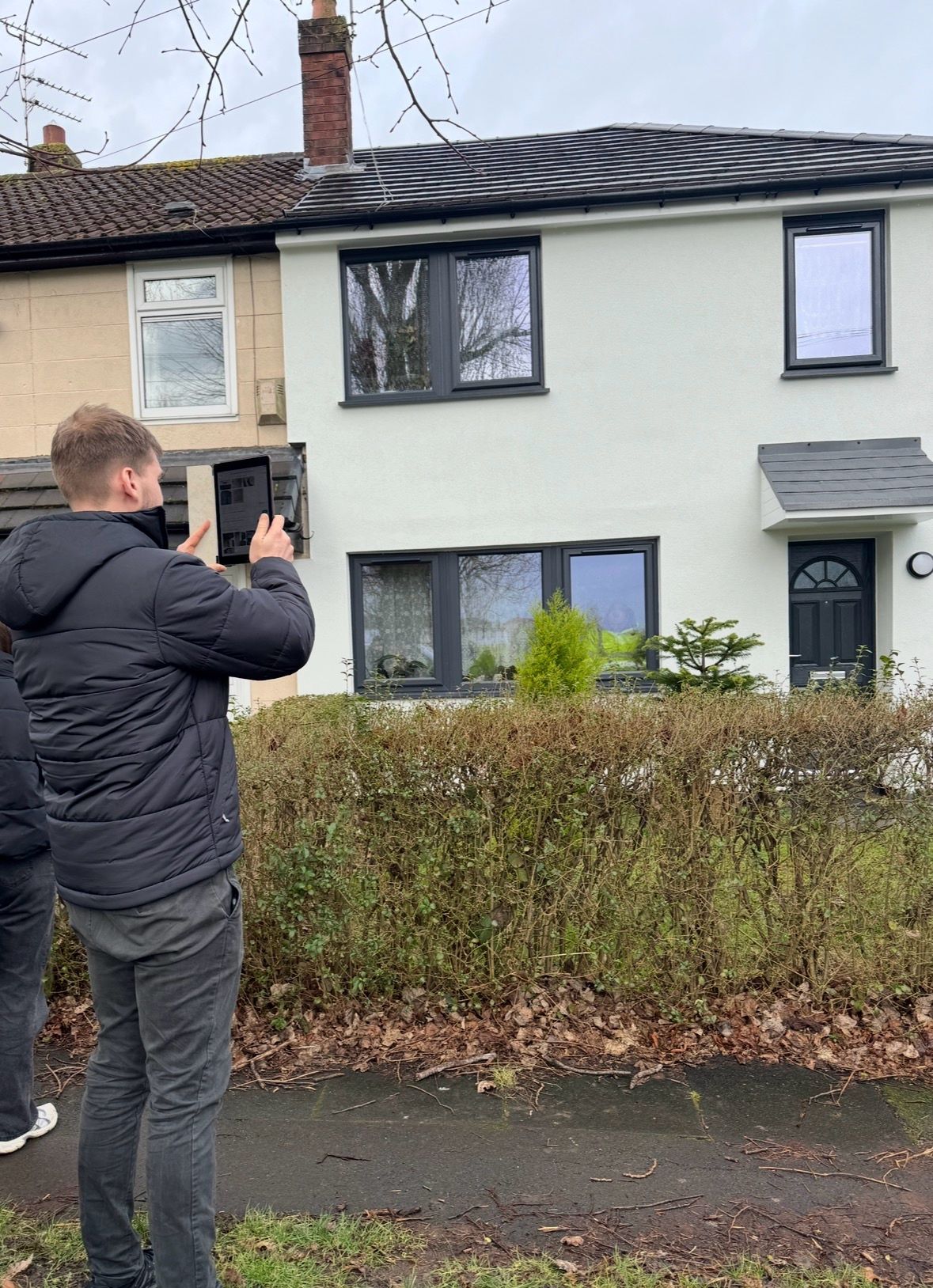
The success of retrofit should be measured not only in carbon saved and measures installed, but in the quality of the homes, streets and communities it leaves behind.
In retrofit, we understandably speak in the language of carbon.
We discuss EPC ratings, funding requirements, PAS compliance, measures installed, energy savings and tonnes of carbon dioxide reduced. Public investment must be accountable, technical decisions must be defensible and programmes must demonstrate measurable environmental outcomes.
But there is another question we should be asking:
What happens to a place when the work is complete?
A successful retrofit programme does more than improve the thermal performance of individual properties.
A warmer, safer and better-maintained home can give residents greater comfort, security and confidence. It can reduce anxiety about energy bills, improve health and restore a sense of dignity to the place in which somebody lives.
When improvements are delivered across an entire street, estate or neighbourhood, however, their effect becomes more significant.
The area begins to look cared for.
Residents can see that investment is reaching them. Streets that may have appeared neglected begin to feel renewed. Homes become more attractive, communities feel more valued and people may regain a sense of pride in where they live.
That social and emotional effect is difficult to represent in a funding return, but it is no less real.
The Relationship Between Place and Pride
Pride can sometimes be dismissed as a sentimental idea, but it has practical consequences.
People are more likely to care for places they believe are worth caring for. They are more likely to participate in their communities when those communities appear respected and supported. They are more likely to believe that progress is possible when they can see evidence of it around them.
The opposite can also be true.
When homes remain cold, streets appear neglected and communities experience years of underinvestment, people can begin to feel forgotten. Confidence in institutions weakens. Frustration grows. National promises feel increasingly disconnected from everyday experience.
It would be simplistic to argue that political division can be resolved through housing investment alone. But it would also be a mistake to ignore the relationship between the physical condition of a place and the emotional condition of the people living within it.
Neglect communicates something.
So does investment.
People do not experience national policy through spreadsheets, ministerial statements or carbon calculations. They experience it through the condition of their homes, the appearance of their streets and the opportunities available to their families.
Retrofit can make government investment tangible.
It can become a warmer bedroom, a more manageable energy bill, improved air quality, a better-looking street and a visible indication that an area has not been forgotten.
That is more than an environmental outcome. It is a social and democratic one.
Why Area-Based Retrofit Matters
This is why area-based delivery deserves serious consideration.
Communities are not experienced one property at a time. Residents experience the whole street, the wider estate and the surrounding neighbourhood.
When retrofit is delivered strategically across an area, it can create a sense of collective progress that isolated interventions rarely achieve.
It can also support wider economic renewal.
Large-scale retrofit creates demand for assessors, coordinators, designers, installers, manufacturers, resident liaison teams, technology providers and quality-assurance professionals. With long-term planning, it can create skilled local employment and stronger regional supply chains.
Retrofit therefore has the potential to address several national challenges simultaneously.
It can reduce energy demand.
It can improve the quality of Britain’s housing stock.
It can protect households from energy-price volatility.
It can support skilled employment and economic activity.
It can improve health and wellbeing.
And, when delivered well, it can restore pride and confidence in communities.
Few forms of public investment have the potential to reach so directly into people’s everyday lives.
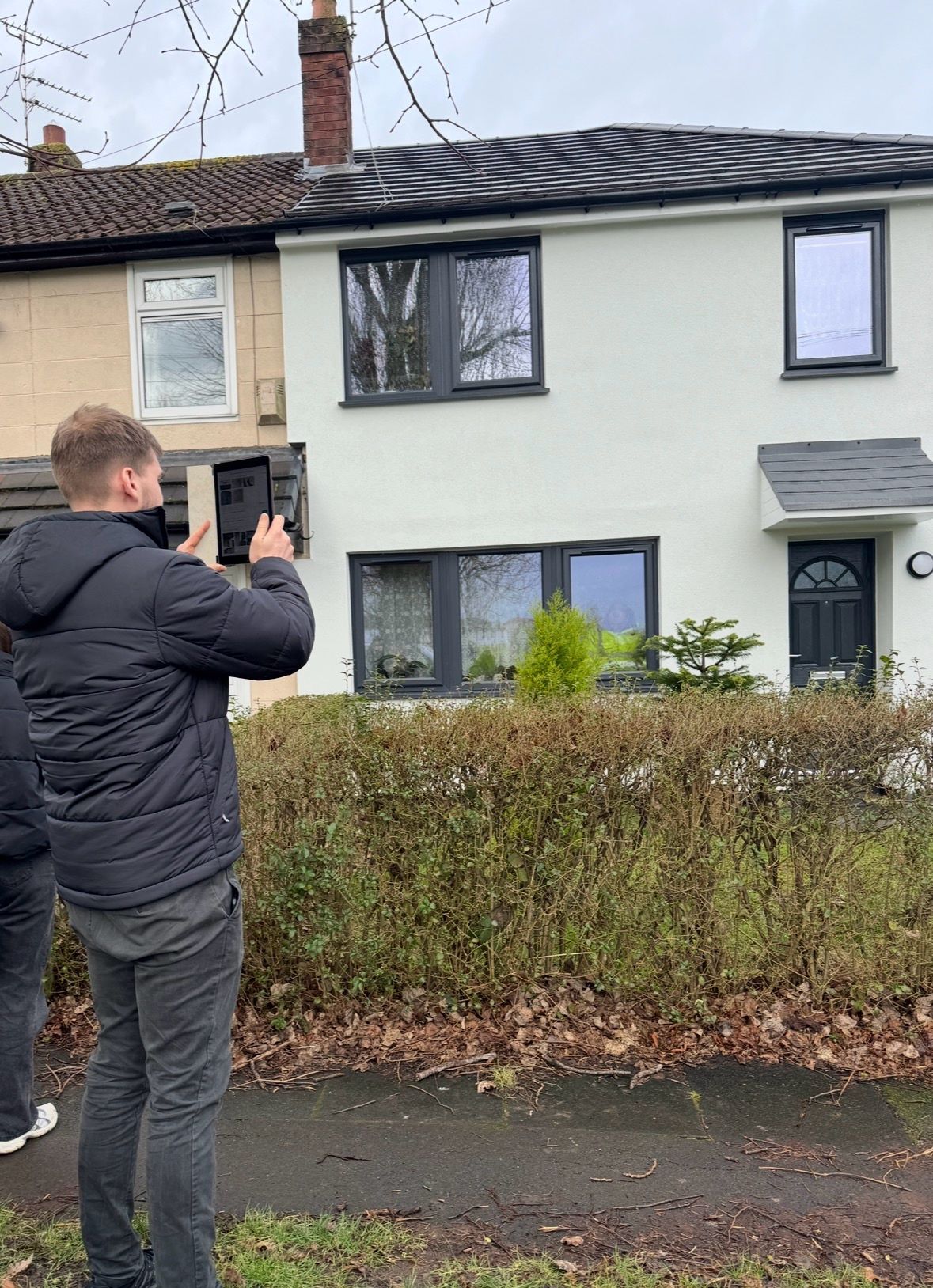
RetrofitOS Retrofit Co-ordinator visiting an SHDF 2.1 completed property in Crewe
Good Intentions Are Not Enough
None of these wider benefits are guaranteed simply because funding has been allocated or measures have been installed.
Poorly managed retrofit can produce the opposite result.
When communication is inconsistent, appointments are missed, residents do not understand what is happening, work is repeatedly delayed or problems remain unresolved, confidence can quickly disappear.
A programme intended to demonstrate investment may instead come to represent disruption, bureaucracy and institutional failure.
This is why resident-centred delivery must be supported by genuine operational control.
Housing associations, local authorities, combined authorities and delivery partners need visibility from the earliest stages of a project.
They need to know:
-
whether residents have been contacted;
-
what communication attempts have been made;
-
which appointments have been booked, changed or missed;
-
what assessments, designs and installations have been completed;
-
where evidence is missing;
-
which properties are at risk of delay;
-
what issues residents have raised; and
-
what action needs to happen next.
Without this visibility, information becomes fragmented across emails, spreadsheets, messages and disconnected systems.
Questions are repeated. Problems are discovered too late. Residents receive conflicting information. Delivery teams spend time reconstructing what has happened rather than controlling what happens next.
That administrative fragmentation is not merely inefficient. It directly affects the resident experience.
Every missed handover, unexplained delay or unresolved defect takes place in somebody’s home.
Operational Control Is Part of Consumer Protection
The technical quality of retrofit and the quality of the resident’s experience cannot be separated.
A programme may appear successful in a headline report while individual residents experience confusion, disruption or poor communication.
Controlled delivery requires a reliable record of the entire journey: resident engagement, assessment, design, approvals, installation, evidence, quality assurance, handover and completion.
Everyone involved should be able to see the latest position, understand their responsibilities and identify emerging risks before they become failures.
This is central to what RetrofitOS is designed to support.
By connecting people, properties, processes, evidence and data within a single operating environment, delivery organisations can move away from fragmented administration and towards informed operational control.
The purpose is not simply to digitise an existing process.
It is to create greater visibility, accountability and auditability across the programme so that teams can make better decisions, act earlier and give residents a more consistent experience.
Technology cannot replace competent people, sound technical judgement or meaningful resident engagement.
It can, however, give those people the structure and information they need to deliver effectively.
An Opportunity for the New Government
Andy Burnham became Prime Minister on 20 July 2026, following his election as Labour leader on 16 July. His record in Greater Manchester has been closely associated with devolution, public-service reform and the belief that national progress must be visible in towns and communities beyond Westminster.
Miatta Fahnbulleh should also be congratulated on her appointment as Secretary of State for Energy Security and Net Zero on 20 July 2026. An economist and former head of the New Economics Foundation, she arrives at the department with extensive experience of energy policy, inequality and the relationship between economic and environmental reform.
Together, the new Prime Minister and Energy Secretary have an opportunity to position retrofit as something more ambitious than a series of short-term carbon programmes.
It can become part of a wider project of national renewal.
That will require long-term policy certainty, investment in skills and supply chains, realistic delivery periods and greater support for housing providers and local government.
It will also require government to look beyond the amount of money allocated and ask what that investment actually leaves behind.
Are residents warmer and more secure?
Do they understand their improved homes?
Has the programme strengthened local employment?
Does the street look and feel better?
Do residents believe the work was done with them rather than to them?
Has public confidence increased?
These questions should sit alongside EPC improvements, carbon savings, compliance and completed measures.
What Should Retrofit Leave Behind?
People do not experience retrofit as a carbon-reduction exercise.
They experience warmer rooms, reduced anxiety about bills, improved comfort, better communication, fewer signs of neglect and a stronger sense that their area is being invested in.
The best retrofit programmes should therefore leave behind more than completed measures and captured carbon.
They should leave behind better homes.
Better streets.
Stronger local economies.
More confident communities.
Greater trust in the organisations responsible for delivery.
And a renewed sense of pride in the places people live.
Achieving that requires more than funding and ambition. It requires coordinated, controlled and resident-centred delivery from the first contact to final completion.
That side of retrofit should never be overlooked.